Three layers, one motion stack.
The Motion Grid captures it. The Motion Index structures it. The Motion Score reports it. Together they form the technology underneath every AKRO application.
Motion Score
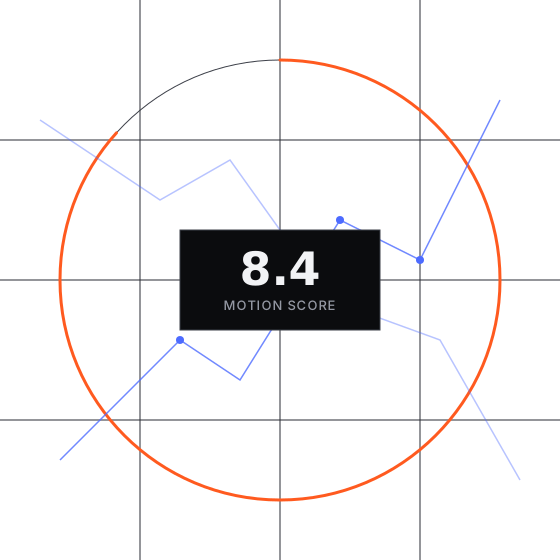
Motion Score is a single figure, out of ten, representing overall movement quality for a given session or device reading. It's calibrated so 8.4 means the same thing whether it's read on a running watch or an industrial exosuit.
It's built to be the one number a non-technical user sees — the rest of the stack exists to make that number trustworthy.
-
Normalised 0–10 scaleComparable across activities, devices and body types.
-
Recalculated per sessionReflects the latest Motion Grid reading, not a static profile.
-
Licensable as a widgetDrops into a partner's existing app or hardware display.
Motion Index
The Motion Index is the classification layer between raw sensor data and the Score. It breaks a movement session into weighted categories — cadence, load symmetry, joint range, recovery decay — each indexed on its own scale before being combined.
This is what lets AKRO explain a score, not just state it: a coach or engineer can see exactly which index moved the number.
- Cadence IndexRhythm and repetition consistency across a session.
- Load IndexDistribution of force across limbs and joints.
- Range IndexJoint articulation against a calibrated healthy range.
- Recovery IndexRate of return to baseline between exertions.
Motion Grid
The Motion Grid is the sensor and data architecture underneath everything else — a coordinate field of motion capture points, whether sourced from wearable IMUs, computer vision, or embedded mobility sensors.
It's device-agnostic by design: the Grid defines the data contract, not the hardware, so any qualifying sensor can feed the same Index and Score.
Motion engineering
The discipline that ties capture, structuring and reporting into a system that can ship inside someone else's product.
Cross-device parity
Ensuring a Score means the same thing regardless of which sensor generated the underlying Grid data.
Real-time reporting
Index and Score calculations designed to run within a session, not just in post-activity analysis.
SDK-first delivery
Built to be embedded — a licensable layer for hardware and app partners rather than a standalone app.
Benchmarked scoring
Score bands validated against reference movement patterns across each supported activity category.